

Solar power has gone from a niche, expensive technology mostly seen on satellites and calculators to one of the cheapest sources of new electricity generation in much of the world. That transformation came down to a combination of manufacturing scale, incremental technology improvements, and years of steadily falling costs, rather than any single breakthrough.
How Solar Panels Actually Work
Solar panels are made of photovoltaic cells, most commonly built from silicon, that generate an electric current when sunlight strikes them, a phenomenon called the photovoltaic effect. Individual cells are wired together into panels, and panels are combined into arrays sized anywhere from a residential rooftop system to a utility-scale solar farm spanning thousands of acres. An inverter then converts the direct current electricity produced by the panels into the alternating current used by homes, businesses, and the grid.
Photovoltaic Versus Solar Thermal
Most solar installations people encounter, rooftop panels and utility-scale solar farms, use photovoltaic technology to generate electricity directly. A separate technology, concentrated solar power, uses mirrors to focus sunlight and generate heat, which drives a conventional steam turbine, and can sometimes store that heat for hours to generate electricity after the sun has set, an advantage traditional photovoltaic panels don’t have on their own.
Residential Versus Utility-Scale Solar
- Residential solar systems are typically installed on rooftops, offsetting a portion or all of a household’s electricity use and, in many markets, allowing excess power to be sold back to the grid.
- Commercial solar installations cover larger rooftops or dedicated land, often to offset a business’s own electricity costs.
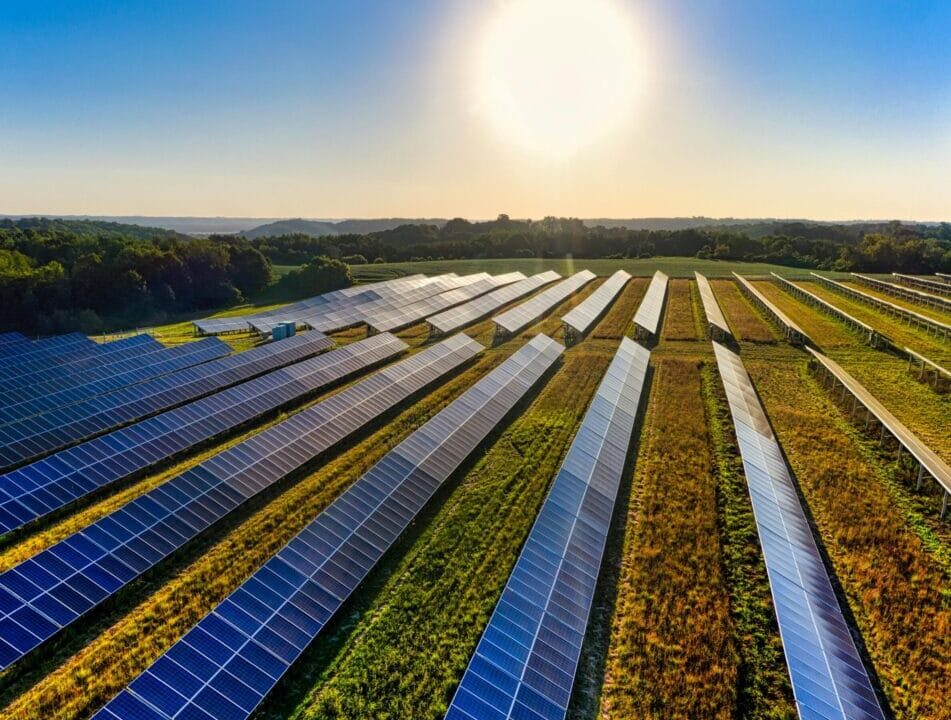
- Utility-scale solar farms are built specifically to generate electricity for the grid, and benefit from economies of scale that make them among the cheapest sources of new electricity generation in many regions.
The Benefits Driving Adoption
Solar panels have no fuel costs and require relatively little maintenance once installed, and manufacturing costs have fallen dramatically over the past decade as production has scaled up globally. Solar is also uniquely modular, a technology that scales just as sensibly for a single rooftop as for a massive utility farm, which has made it adoptable by homeowners, businesses, and utilities alike.
The Challenges That Remain
Solar power only generates electricity when the sun is shining, making it inherently intermittent and dependent on batteries or other backup generation to provide power at night or during cloudy weather. Utility-scale solar farms also require significant land area, which can create tension with agricultural use or conservation priorities in some regions, and the manufacturing of solar panels, along with their eventual disposal or recycling, carries its own environmental footprint that the industry continues working to reduce.
Where Solar Is Headed
Solar panel efficiency continues to improve gradually through advances in cell design and materials, while costs continue their long-term downward trend as manufacturing scales further. Increasingly, solar is being deployed alongside battery storage, allowing excess daytime generation to be used in the evening, which addresses solar’s core limitation and is widely expected to be one of the defining combinations of the broader shift toward renewable energy.