

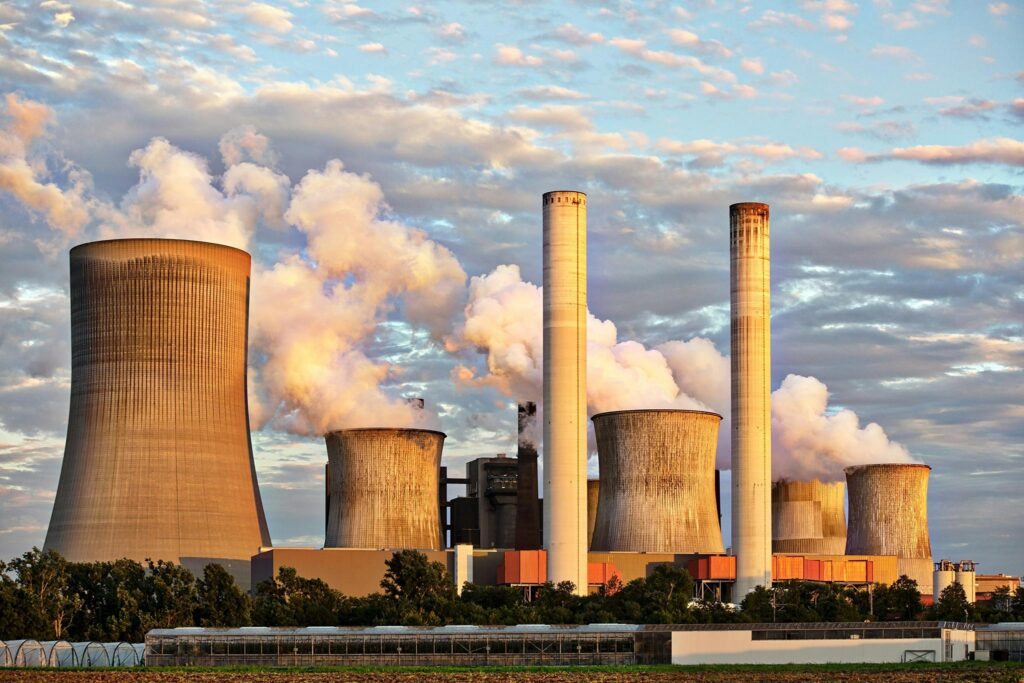
Nuclear energy occupies a strange place in the public imagination: it is simultaneously one of the cleanest, most reliable sources of electricity ever developed and one of the most feared. Understanding how it actually works, and where the real risks and benefits lie, helps separate the physics from the politics.
How Nuclear Power Actually Works
Nuclear power plants generate electricity through fission, the splitting of heavy atomic nuclei, usually uranium-235 or plutonium-239. When a neutron strikes the nucleus of one of these atoms, it splits apart, releasing an enormous amount of energy as heat, along with more neutrons that go on to split additional atoms in a controlled chain reaction. That heat boils water into steam, the steam spins a turbine, and the turbine drives a generator, the same basic principle used in coal or gas plants, just with a very different heat source.
The chain reaction is kept in check by control rods, typically made of materials like boron or cadmium, which absorb excess neutrons. Pulling the rods out speeds up the reaction; pushing them in slows it down or stops it. Multiple independent safety systems, along with thick containment structures, are designed to keep the reaction and the radioactive material safely isolated under normal and emergency conditions alike.
Types of Reactors
Most reactors operating today are light-water reactors, which use ordinary water as both coolant and neutron moderator, and come in two main varieties: pressurized water reactors (PWRs) and boiling water reactors (BWRs). Newer designs, often called Generation III+ or Generation IV reactors, aim to improve on this template with passive safety systems that rely on gravity and natural circulation rather than pumps, and some experimental designs use molten salt or gas as a coolant instead of water. Small modular reactors (SMRs) have also become a major focus of the industry, promising factory-built components, lower upfront costs, and flexible siting compared to traditional gigawatt-scale plants.
The Case For Nuclear Power
- Extremely high energy density: a small amount of nuclear fuel produces a vast amount of electricity compared to fossil fuels.
- Reliable, around-the-clock output that does not depend on weather or time of day, unlike solar or wind.
- No direct greenhouse gas emissions during operation, making it a significant tool for reducing carbon emissions from electricity generation.
- A strong long-term safety record when measured in deaths per unit of energy produced, comparable to or better than most other major electricity sources.
The Risks and the Controversy
Public concern about nuclear energy is shaped heavily by a handful of major accidents. The 1986 Chernobyl disaster in Ukraine, caused by a combination of reactor design flaws and operator error, released large amounts of radioactive material and remains the worst nuclear accident in history. The 2011 Fukushima Daiichi accident in Japan, triggered by an earthquake and tsunami that disabled backup cooling systems, led to meltdowns at three reactors and a large-scale evacuation. Both events left a lasting mark on public perception, even though modern reactor designs incorporate lessons learned from each.
Beyond accident risk, the two other major concerns are radioactive waste and cost. Spent nuclear fuel remains radioactive for thousands of years and requires long-term storage solutions, an unresolved policy challenge in many countries. Building large nuclear plants is also capital-intensive and prone to delays and cost overruns, which is part of why small modular reactors have generated so much interest as a potentially cheaper, faster alternative.
Nuclear’s Role in the Energy Transition
As countries work to cut carbon emissions while keeping electricity grids stable, nuclear power is increasingly framed as a complement to renewables rather than a competitor. Solar and wind are cheap and clean but intermittent; nuclear is expensive to build but provides steady, weather-independent output. A number of countries have extended the operating life of existing reactors and revived plans for new ones as part of their decarbonization strategies, while others continue to phase nuclear out in favor of renewables and storage. The debate over nuclear energy, in other words, is less about whether the physics works, it clearly does, and more about cost, waste management, and public trust.