

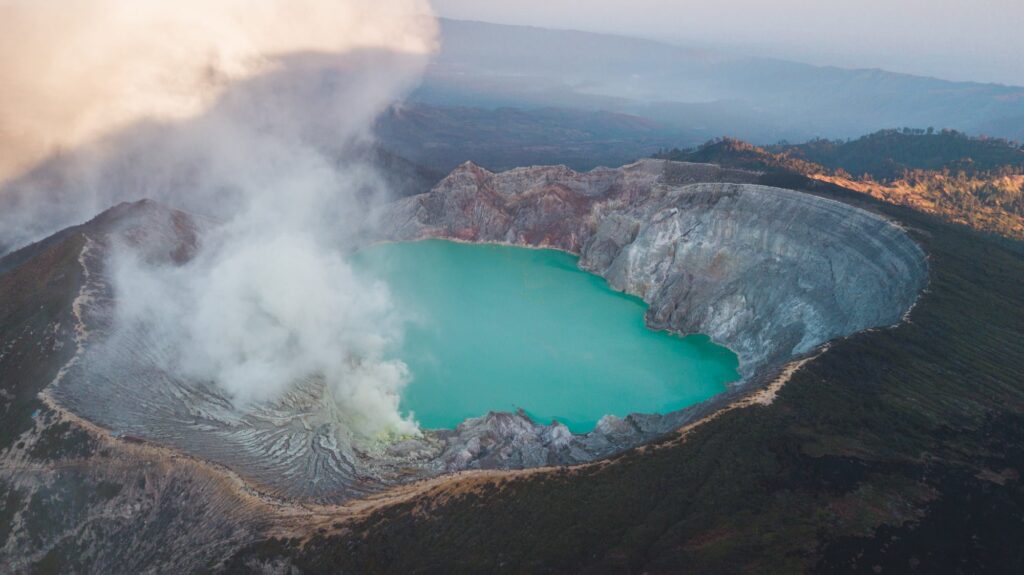
Beneath the earth’s crust lies a nearly constant source of heat, left over from the planet’s formation and ongoing radioactive decay deep underground. Geothermal energy taps into that heat to generate electricity and provide direct heating, offering something rare among renewable sources: power that doesn’t depend on the weather and is available around the clock.
How Geothermal Energy Works
At its simplest, geothermal energy relies on the fact that temperatures increase the deeper you go underground. In regions with high geothermal activity, wells are drilled down to naturally occurring hot water or steam reservoirs, which are brought to the surface to spin a turbine directly or, in cooler reservoirs, used to heat a secondary fluid that vaporizes and drives the turbine instead. Once the fluid gives up its heat, it’s typically injected back underground to be reheated and reused, making the process largely self-sustaining over the life of the plant.
Types of Geothermal Systems
- Dry steam plants, the oldest type, use steam directly from underground reservoirs to spin turbines.
- Flash steam plants, the most common type today, pull high-pressure hot water from underground and flash it into steam as pressure drops.
- Binary cycle plants use moderately hot water to heat a separate fluid with a lower boiling point, allowing geothermal energy to be harnessed even in areas with lower-temperature resources.
- Geothermal heat pumps, used at the residential and commercial scale, take advantage of stable shallow-ground temperatures for efficient heating and cooling rather than electricity generation.
Where Geothermal Works Best
Traditional geothermal power plants are concentrated in regions with significant volcanic or tectonic activity, where underground heat is close enough to the surface to access economically, think Iceland, parts of the western United States, the Philippines, and Indonesia. Geothermal heat pumps, by contrast, can work almost anywhere, since they rely on stable shallow-ground temperatures rather than deep geological hot spots, making them a much more widely applicable technology for individual homes and buildings.
Benefits and Limitations
Geothermal power plants offer highly reliable, around-the-clock output with a small physical footprint compared to solar or wind farms of similar capacity, and very low operating emissions. The major limitation is geography: traditional geothermal power is only economically viable in areas with the right underground conditions, and the high upfront cost of drilling exploratory wells, some of which turn out to be commercially unviable, creates significant financial risk for developers.
Emerging Technology: Enhanced Geothermal Systems
A newer approach, called enhanced or engineered geothermal systems, aims to expand where geothermal energy can be developed by injecting fluid into hot, dry rock formations to create artificial reservoirs, rather than relying on naturally occurring ones. If proven commercially viable at scale, this approach could dramatically expand the geography where geothermal energy is a practical option, moving it well beyond the volcanically active regions where it’s traditionally been limited.